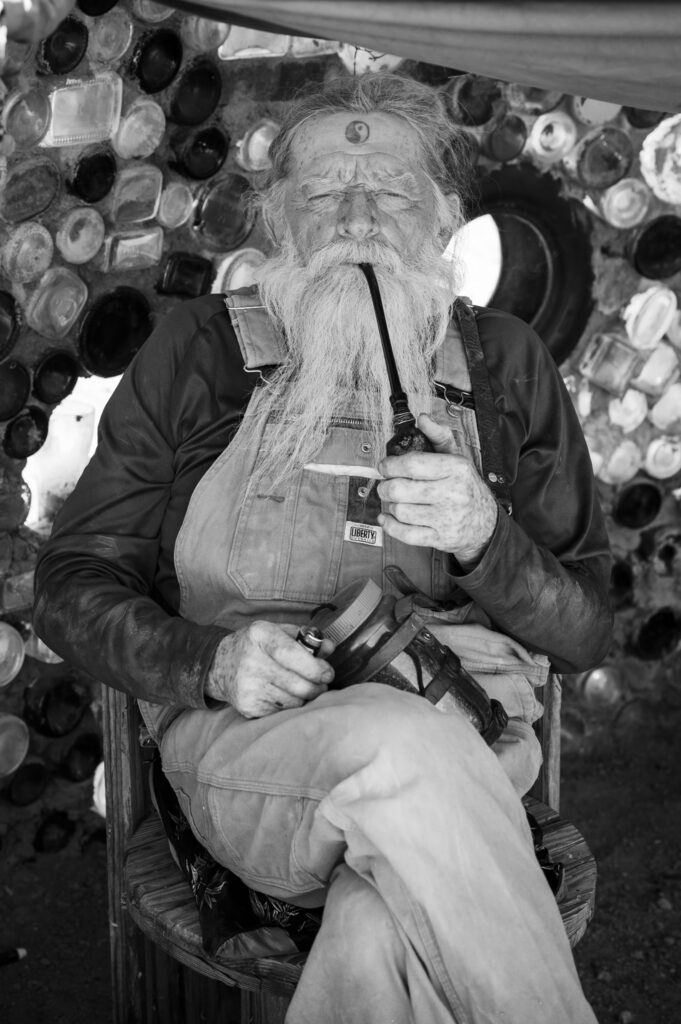
A long time resident and artist, known only as The Wizard, smokes his pipe.
My mother spends her winters in Lake Havasu Arizona, where my brother lives. She needs a hand driving down in December, and driving home in April, so I’ve been making a couple of trips to the Southwest a year. This April I flew down a week early, borrowed her Jeep, and did a tour of the Southwest. I wanted to see the Salton Sea, an area that’s always fascinated me. My wife point blank refused to go there, as the area has a not so great reputation, to put it lightly, so it seemed like a good solo destination for me.
Slab City was my first stop. It’s on the site of an old World War II marine training base. When the military closed it down after the war, the concrete slabs the military building were built on were left behind, which is where the Slab City name comes from. The residents are all squatters, nobody I met seemed to have any idea who actually owned the land. There’s a few bars, a library, and a hostel. I arrived in April and most of the residents had moved on for the summer, as the daytime temperatures regularly get up into the mid-40’s C. I met a few people, but nobody was very responsive to the idea of having their pictures taken.
As a throw back to it’s military heritage, helicopter gunships are constantly flying low overhead on training runs from another nearby air base.
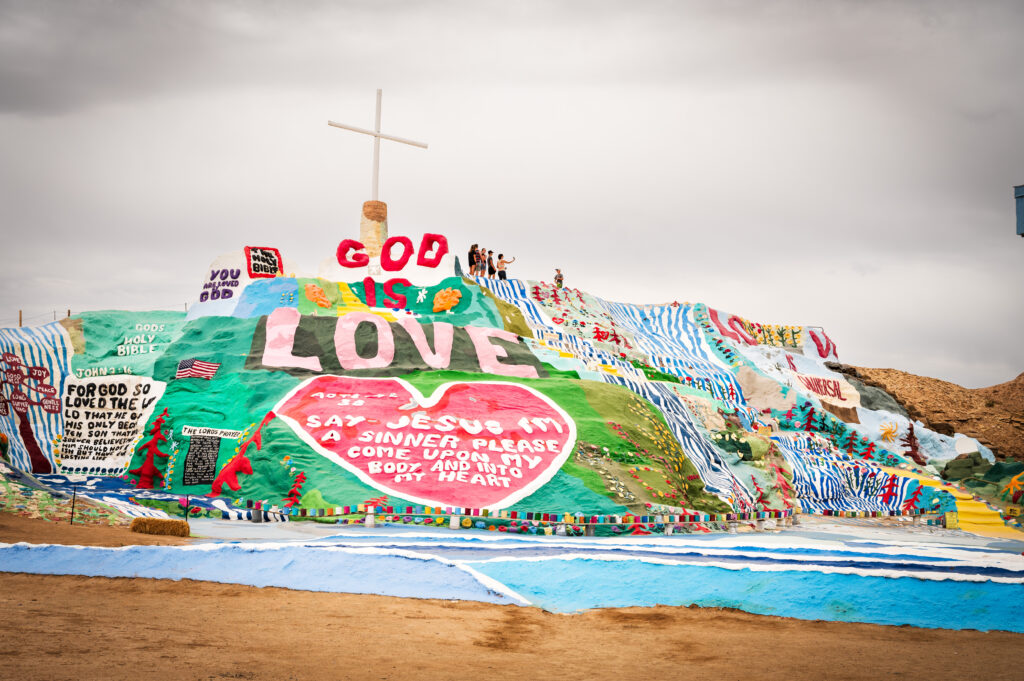
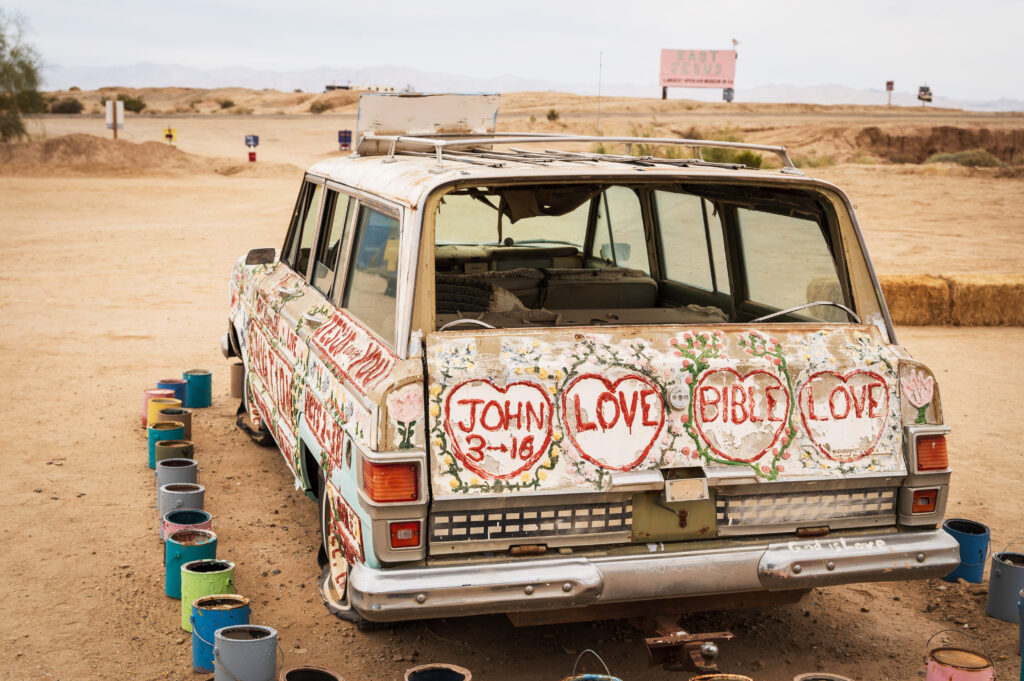
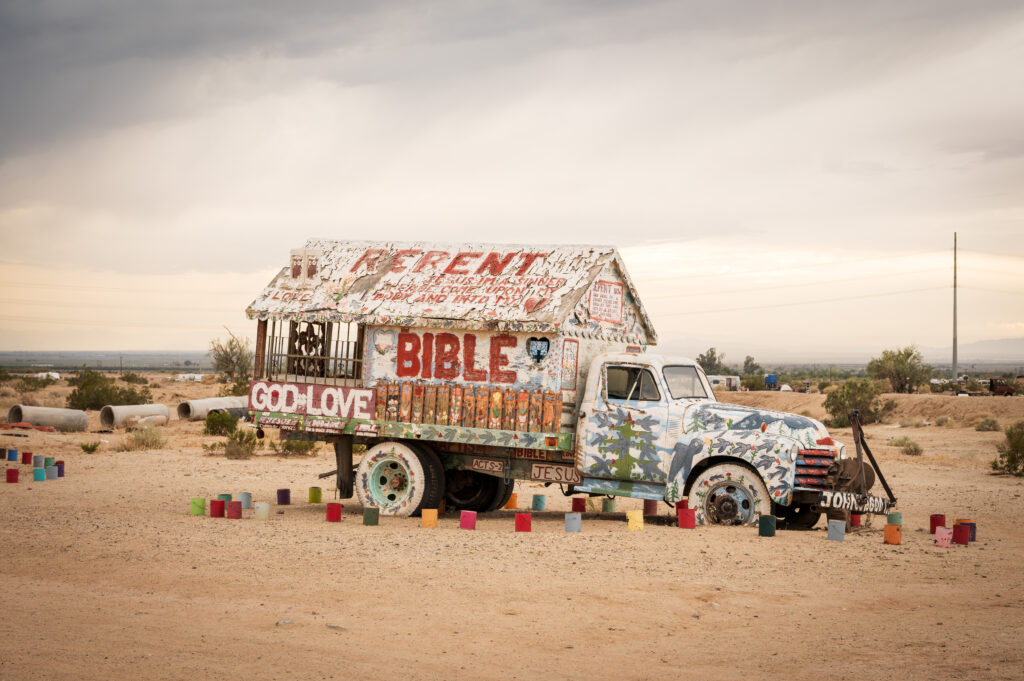
One of the most famous Slab City landmarks is Salvation Mountain, a brightly coloured, Bible-themed art installation created by Leonard Knight. It’s the first installation you see when you drive in from the really sad local town of Niland California. At first the area is pretty intimidating, with old burned out camper trailers all over the desert, but there’s a big welcome sign and a parking lot. I went by a few times and found there was always a local Slab City resident in a safety vest acting as kind of a docent for the installation. I found they were a friendly source of local information, and they assured me visitors were welcome through most of the area.
It seemed like a popular destination for church groups in vans and young families as well.
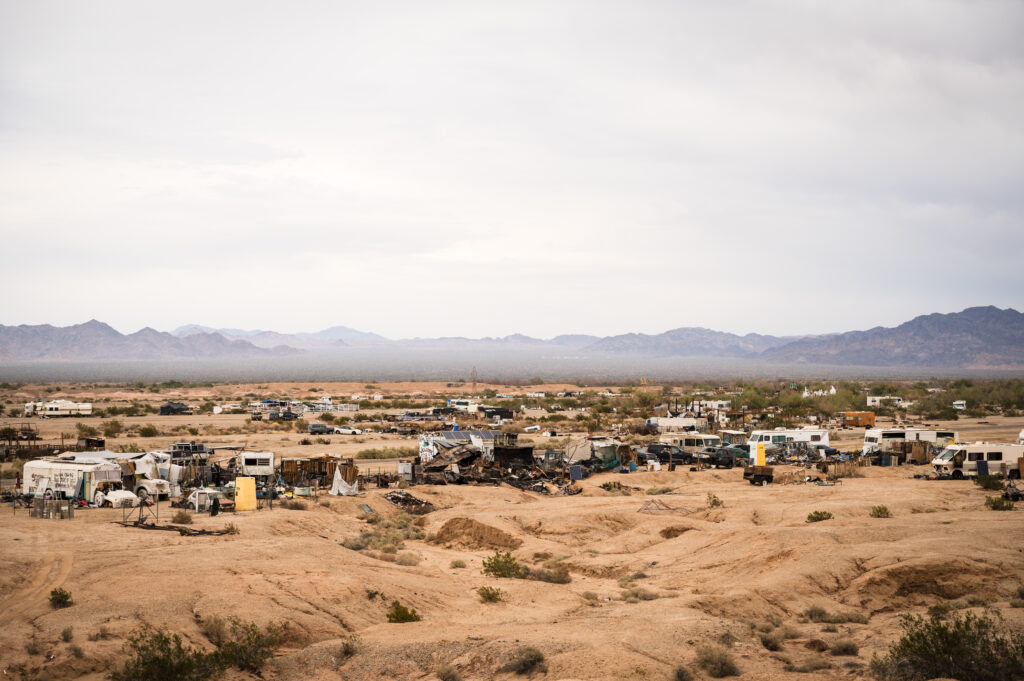
Slab City, as seen from the top of Salvation Mountain.
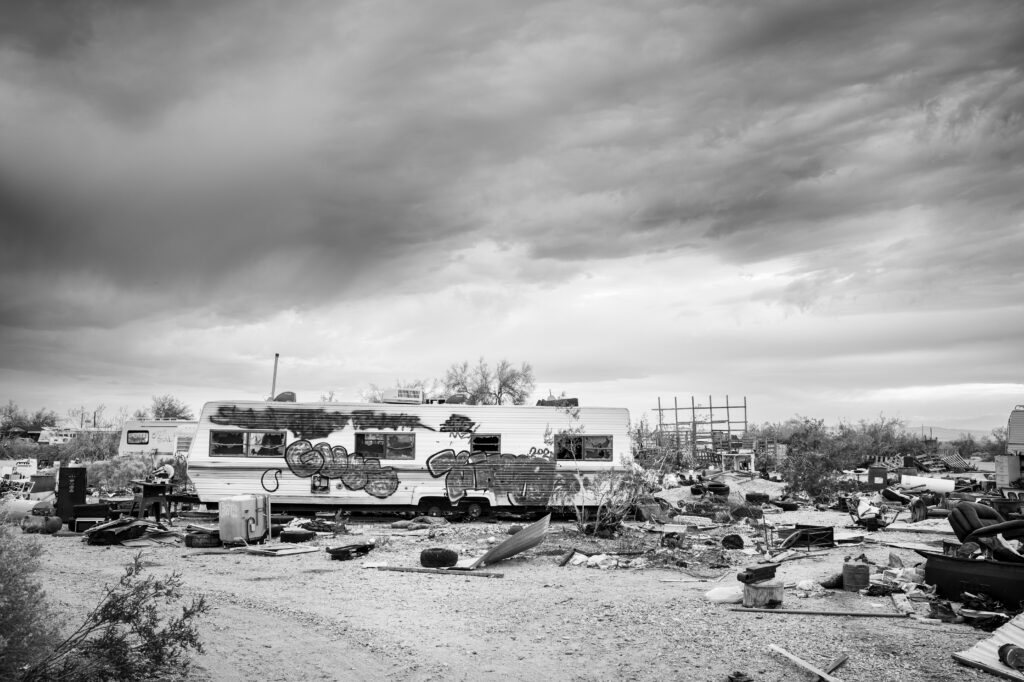
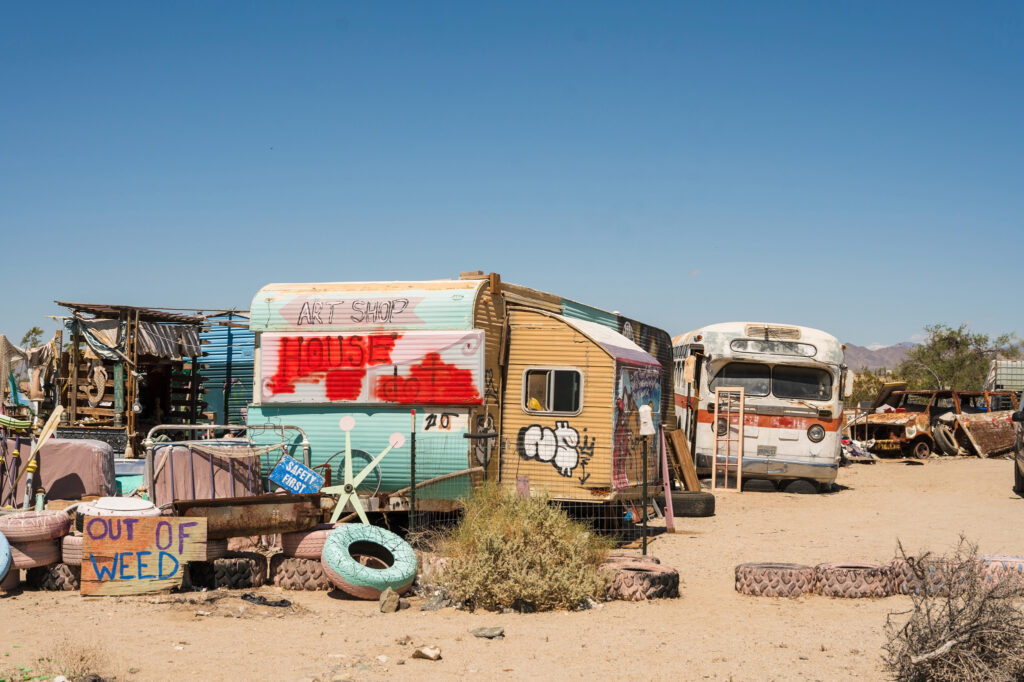
Out of weed.
There is no formal infrastructure—no running water, sewage system, electricity grid, or official government oversight. Residents, a mix of year-round “Slabbers” and seasonal visitors known as “snowbirds,” rely on generators, solar panels, and ingenuity to survive the harsh desert conditions, where summer temperatures can soar well above 40°C. The campers all had large plastic water tanks that one of the locals said cost about US $40 to get filled. A local septic truck comes by weekly to pump out peoples camper holding tanks. There is no electrical power at all, save for some Amazon style solar panels.
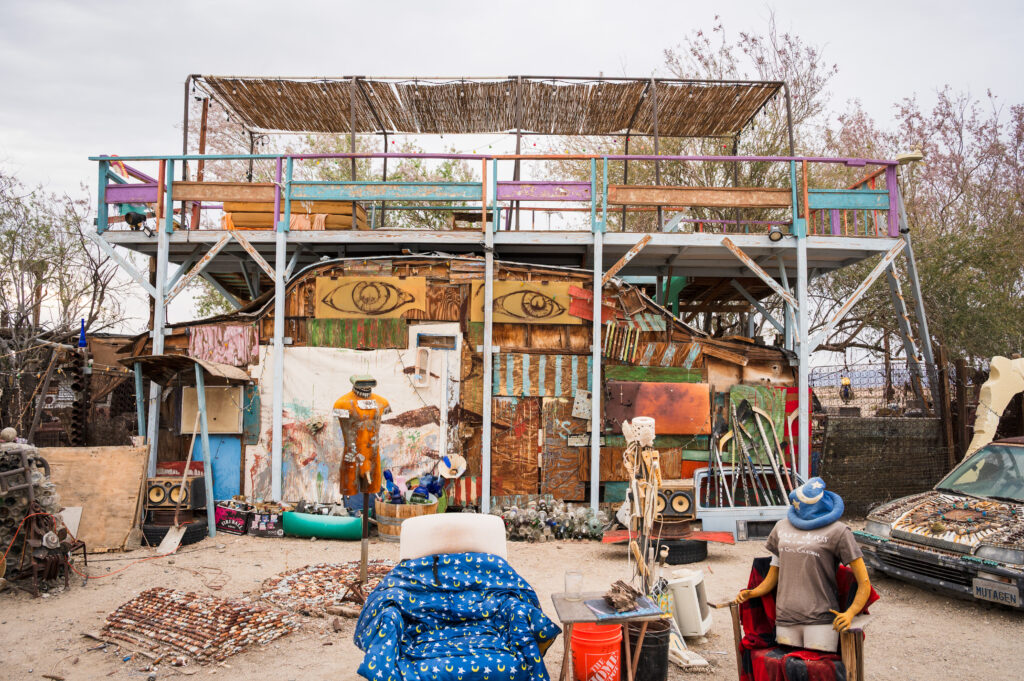
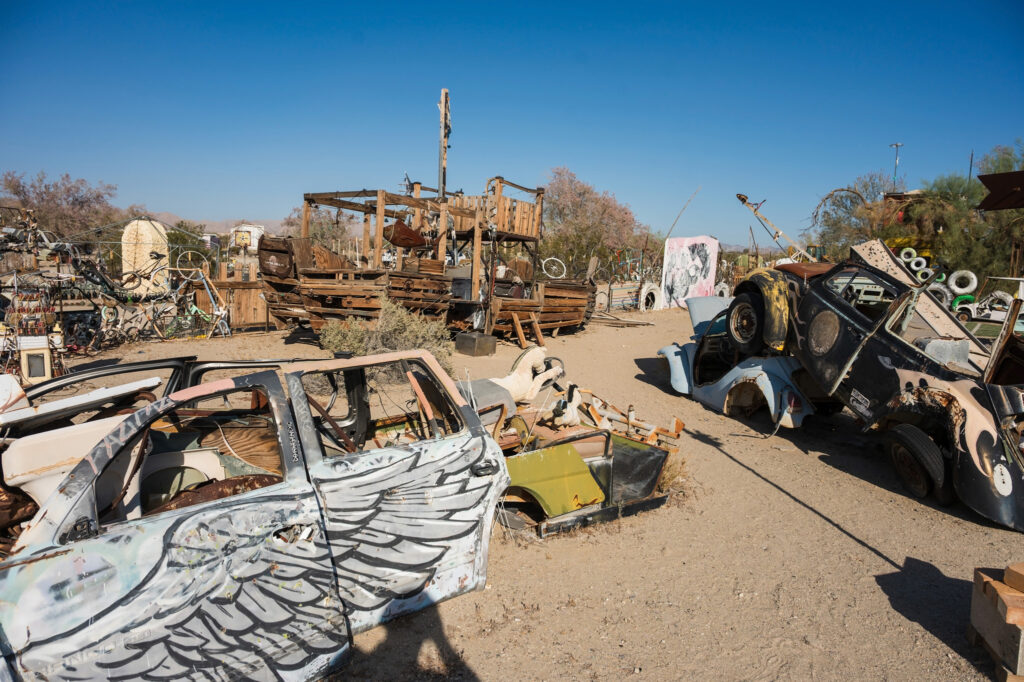
East Jesus, Slab City, also calledThe Slabs, an off-the-grid alternative lifestyle community near the Salton Sea.
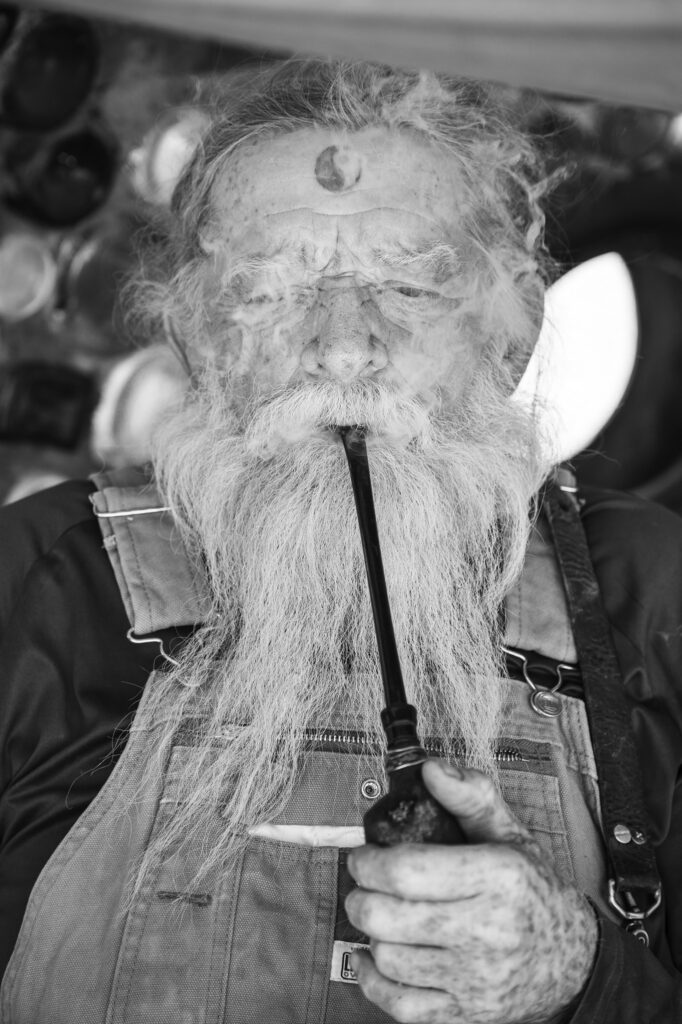
A long time resident and artist, known only as The Wizard, smokes his pipe.
At the end of the road into Slab City is an art colony known as East Jesus. There are welcome signs and a little parting lot. Sitting under a tarp at the opening gate is a local artist known only as ‘The Wizard’. He greeted visitors with a spiel telling everyone to feel free to handle the art and don’t worry about breaking anything. Pretty much the opposite of any other art gallery I’ve ever visited.
The site is known for its massive assemblages made from discarded materials—old TVs, car parts, broken electronics, and scrap metal—transformed into surreal installations. Walking through it feels like entering a post-apocalyptic art world: kinetic sculptures whir in the sun, walls of CRT monitors glow with repurposed circuitry, and towering figures emerge from junk piles.
Where is it?
The Salton Sea is about 30 km’s due south of Interstate 10, which is the freeway that runs from Los Angles to Phoenix. Coachella, the site of the giant music festival, is just north of the lake. Google Maps will take you to both Slab City and Bombay Beach.
I drove in from Lake Havasu, through the Imperial Dunes (where the sand dune scenes in the original Star Wars were filmed) along highway 78, then north on Highway 101 until you get to the bleak farming town of Niland CA. One of the few still running businesses is a roadside grocery and liquor store where you hang a hard right and drive about three kilometres to Slab City. Stop at the store and get some bottled water, it’s very hot and dry and there’s nothing to drink at Slab City.
Is it dangerous?
Honestly, I found it was hard to believe anybody lived here. I kept thinking that if the world ended, it would look like Slab City. That said, everybody I met was pretty friendly, if a little shy. I think most of the people are more of a hazard to themselves rather than anybody else. As a photographer, you have to be careful not treat people like animals in a zoo. Ask before you take any photos, and take the time to get to know the person a bit. I sent a few people sets of photos, except for the Wizard, who didn’t own a computer or phone, and had no e-mail address.