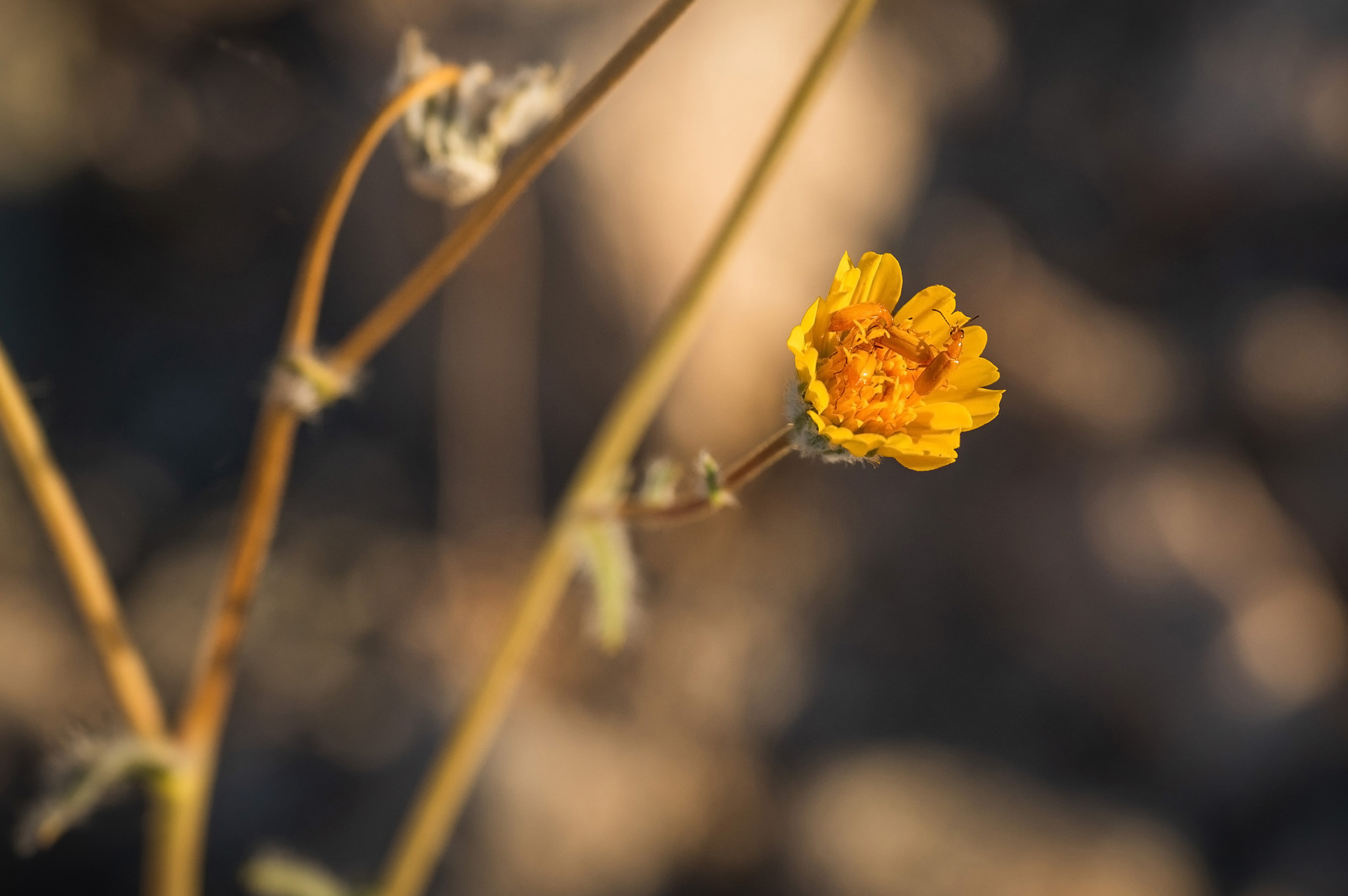
Geraea canescens, commonly known as desert sunflower, hairy desert sunflower, or desert gold, with unknown yellow insects. Near the Badwater Basin in Death Valley National Park at sunset. California, USA.
Twice a year I head to Lake Havasu Arizona, where my mom spends the winter, just to help her with the drive from Whistler to Arizona and back. This spring as we were getting ready to go home, she insisted on driving through Death Valley, which is one of the hottest places in the world, with temperatures regularly in the mid to high 40 degrees celsius. At first I was less than enthusiastic about this detour, but it turned into a really amazing couple of days. A few weeks before we arrived, they had some serious rains and flooding, which you could still see the damage from. Since the humidity was high, fields of wild flowers had bloomed everywhere. Anybody who knows me would not think that I would spend any time at all photographing flowers, but this was a real exception.
These little yellow flowers are known as Desert Gold, and they were everywhere around the Badwater Basin, a big muddy saltwater dry lake. I was walking around in a field of them randomly shooting the occasional flower when I noticed after zooming in to check the focus that this one flower that it was full of these colour matched yellow bugs. The flower was about half an inch across, so these little guys are really small and next to impossible to spot unless you’re really looking for them. I didn’t see another flower that day with similar bugs in it. I stopped in at the park headquarters the next day where I was able to speak speak to the resident naturalist, and she no idea what the bugs were. We grabbed the park biologist and he couldn’t ID them either. Whatever they are, it’s a mystery.
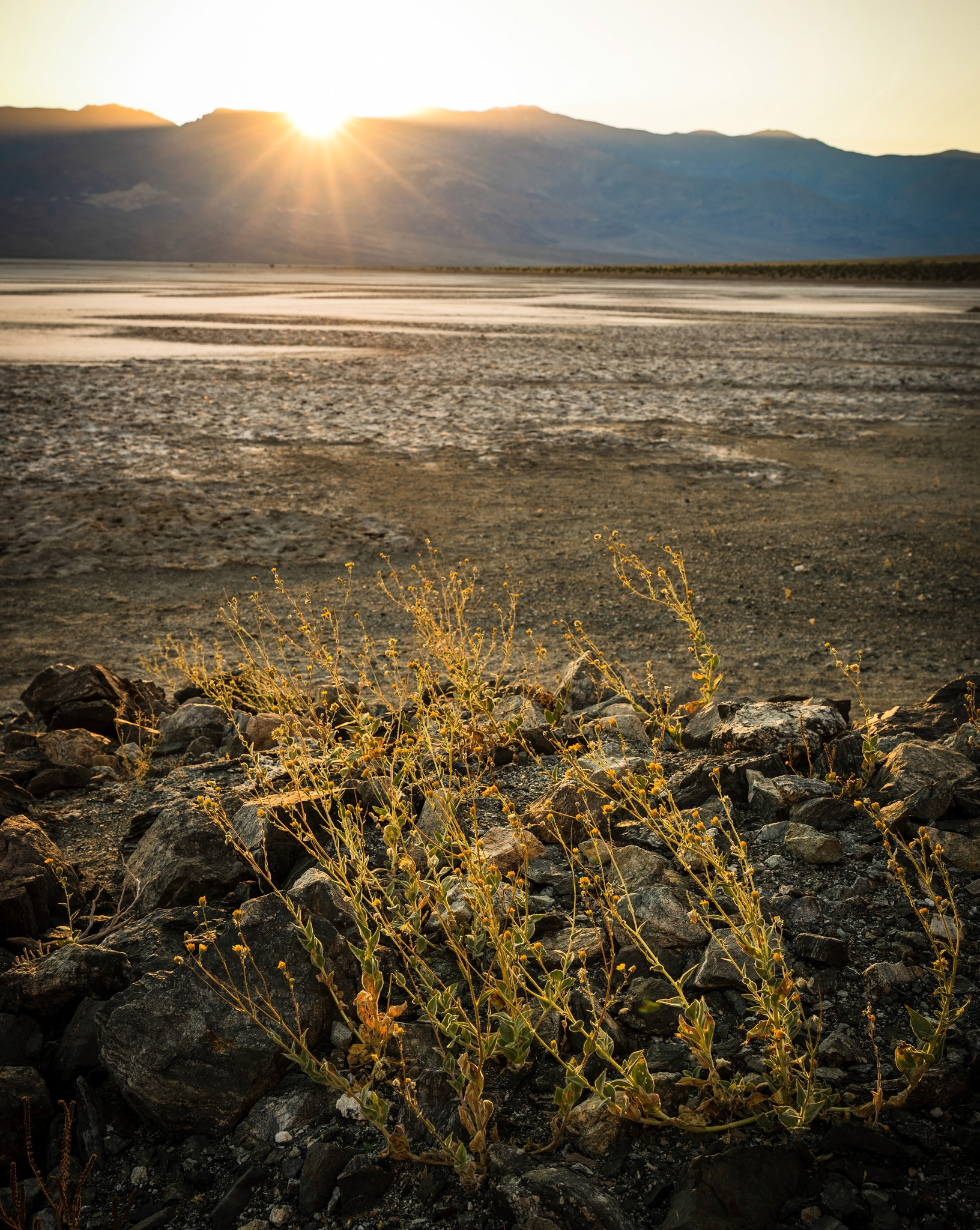
The hairy desert sunflower, or desert gold. Near the Badwater Basin in Death Valley National Park at sunset. California, USA.
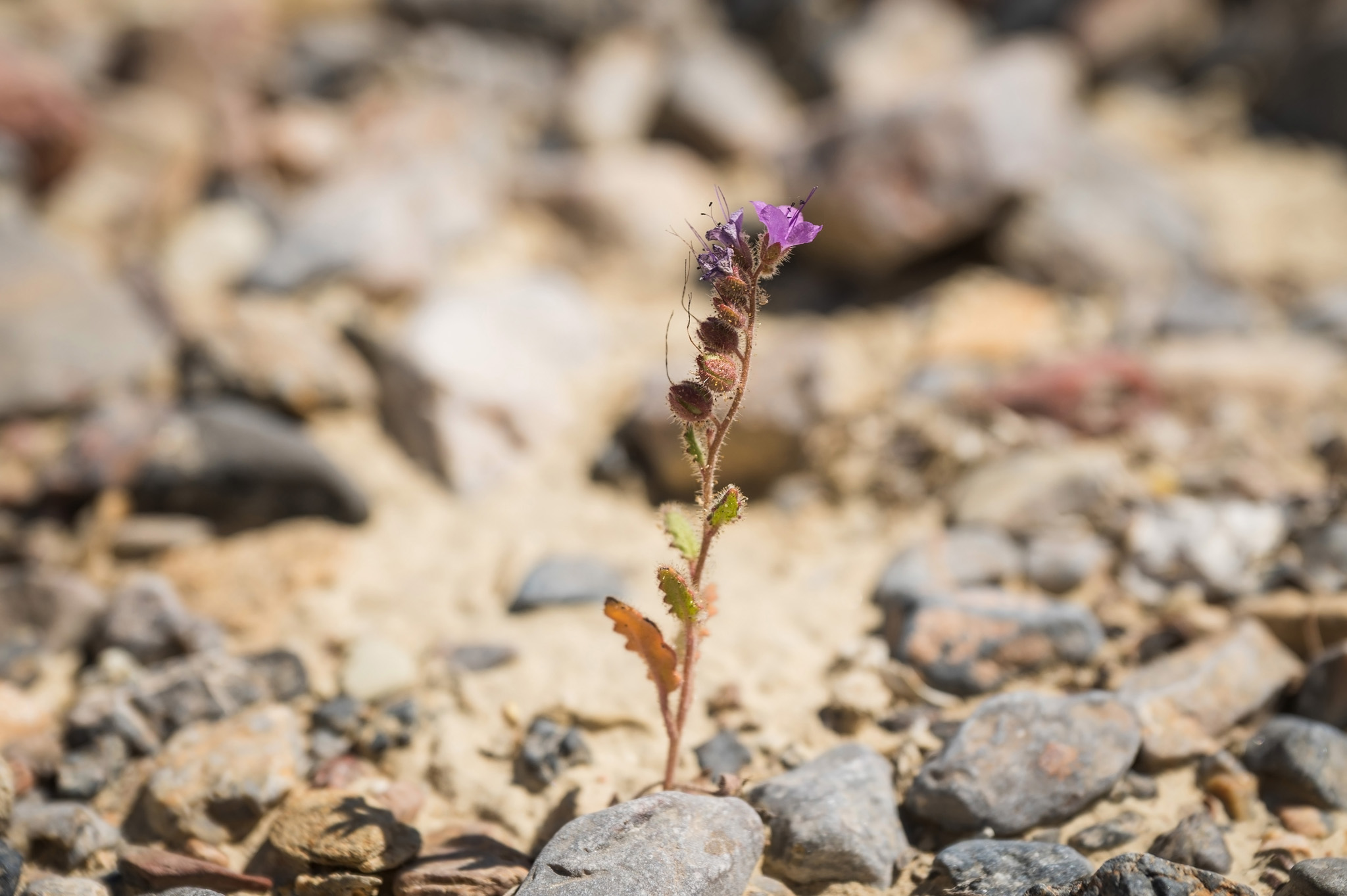
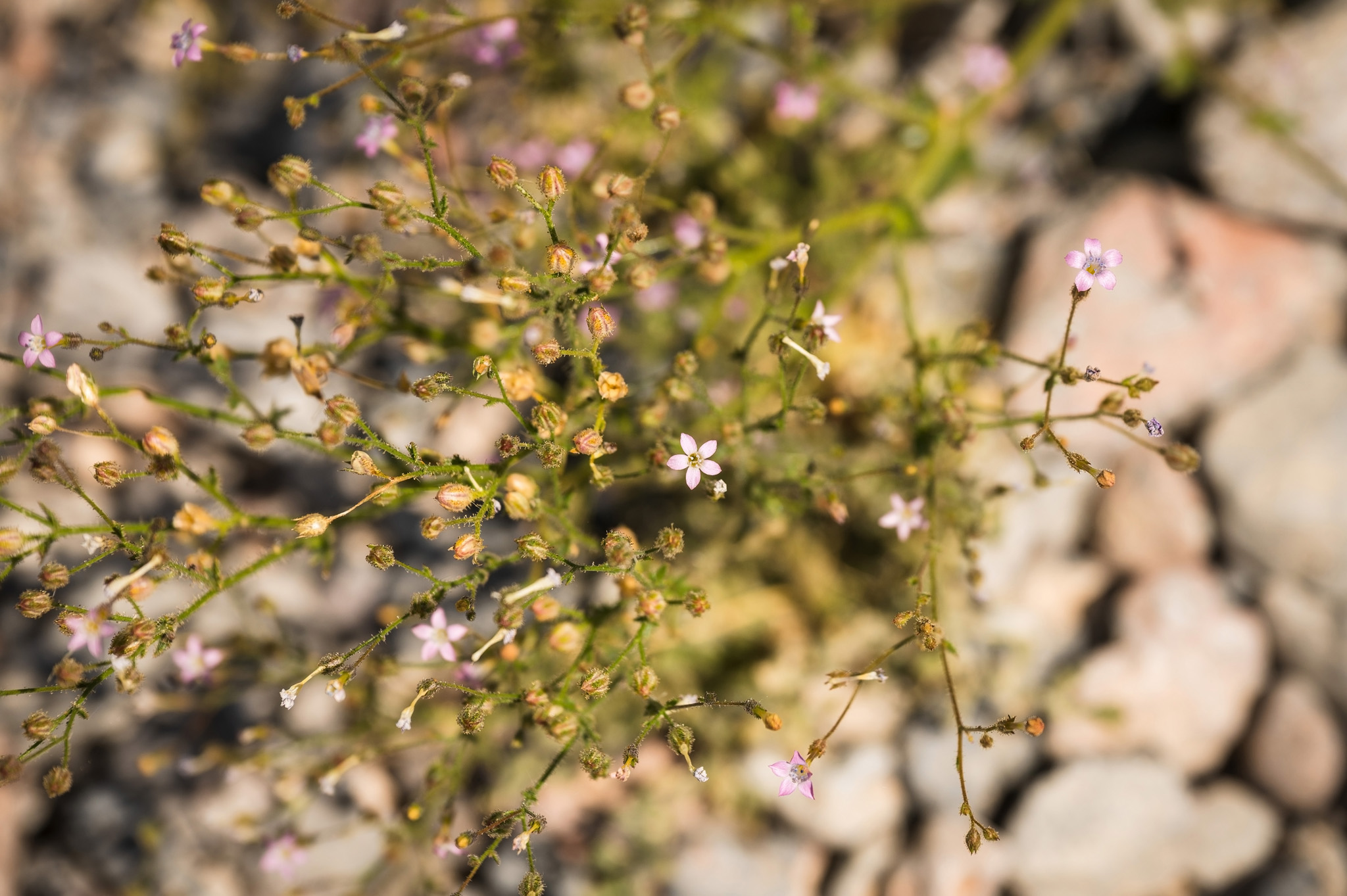
Scorpion weed (the genus Phacelia) is a group of North American wildflowers famous for their fuzzy foliage and curled flower spikes, they contain irritants that can cause severe skin rashes resembling poison ivy.
According the Death Valley naturalist I spoke to, these pretty purple flowers are called Scorpion Weed, and will give you a very nasty rash if you touch them. You can’t really see the them with the naked eye, but the stems are covered with these little poisonous nodules.
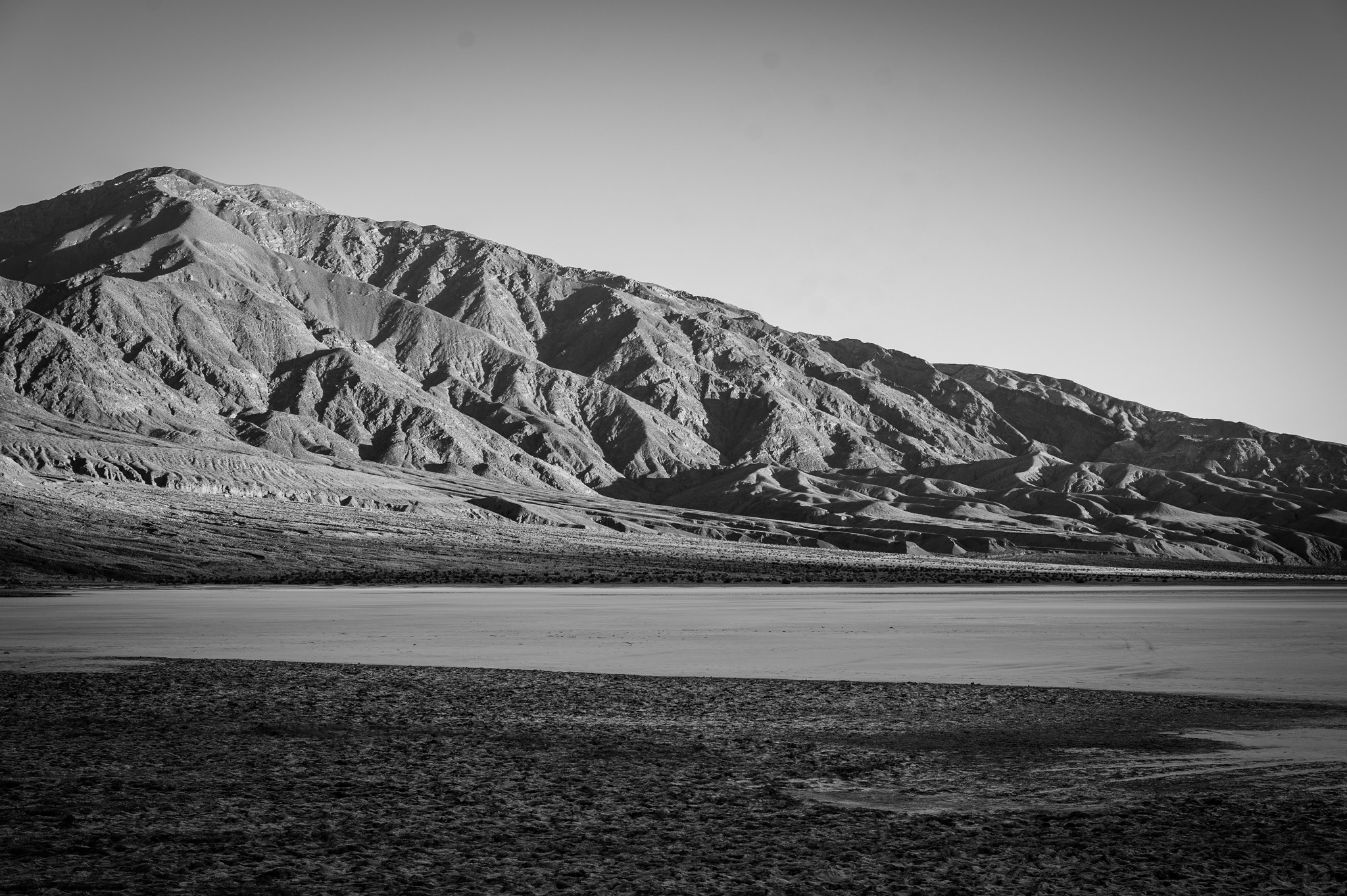
Mountains along the Badwater Basin in Death Valley National Park at sunset. California, USA.
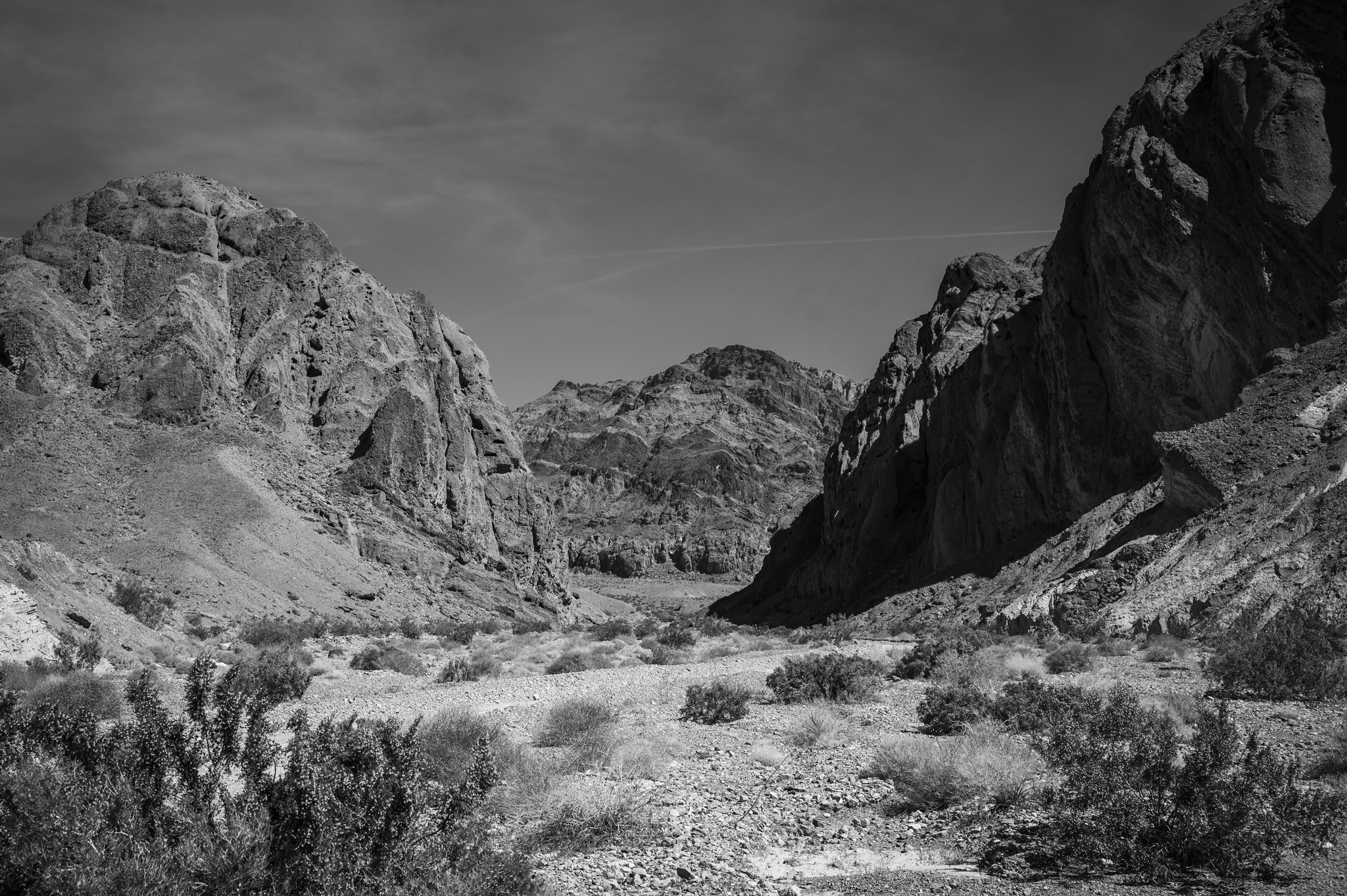
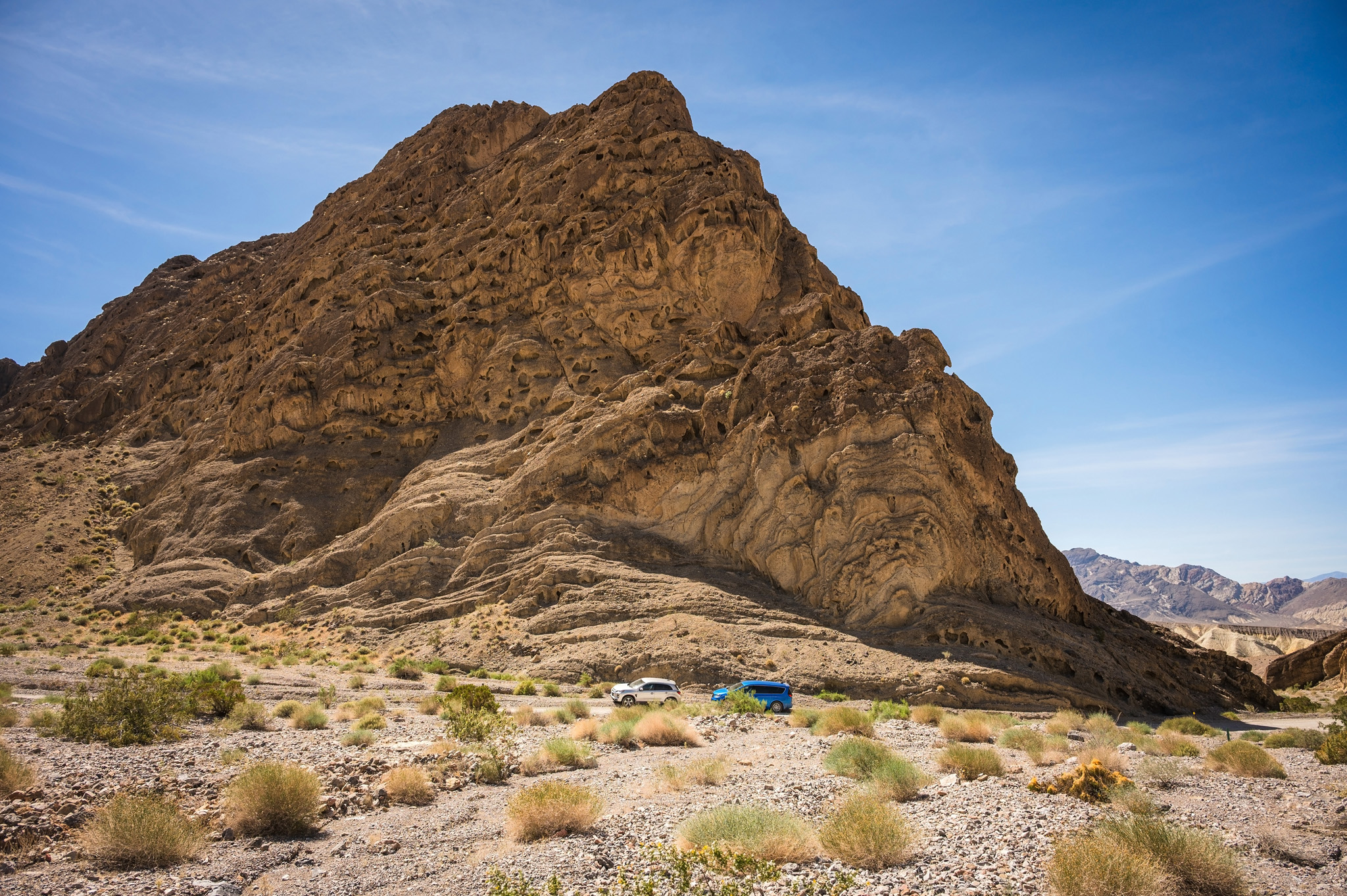
A box canyon at the end of the Hole In The Wall Road, a dirt road that follows a dry riverbed for 10 km’s.
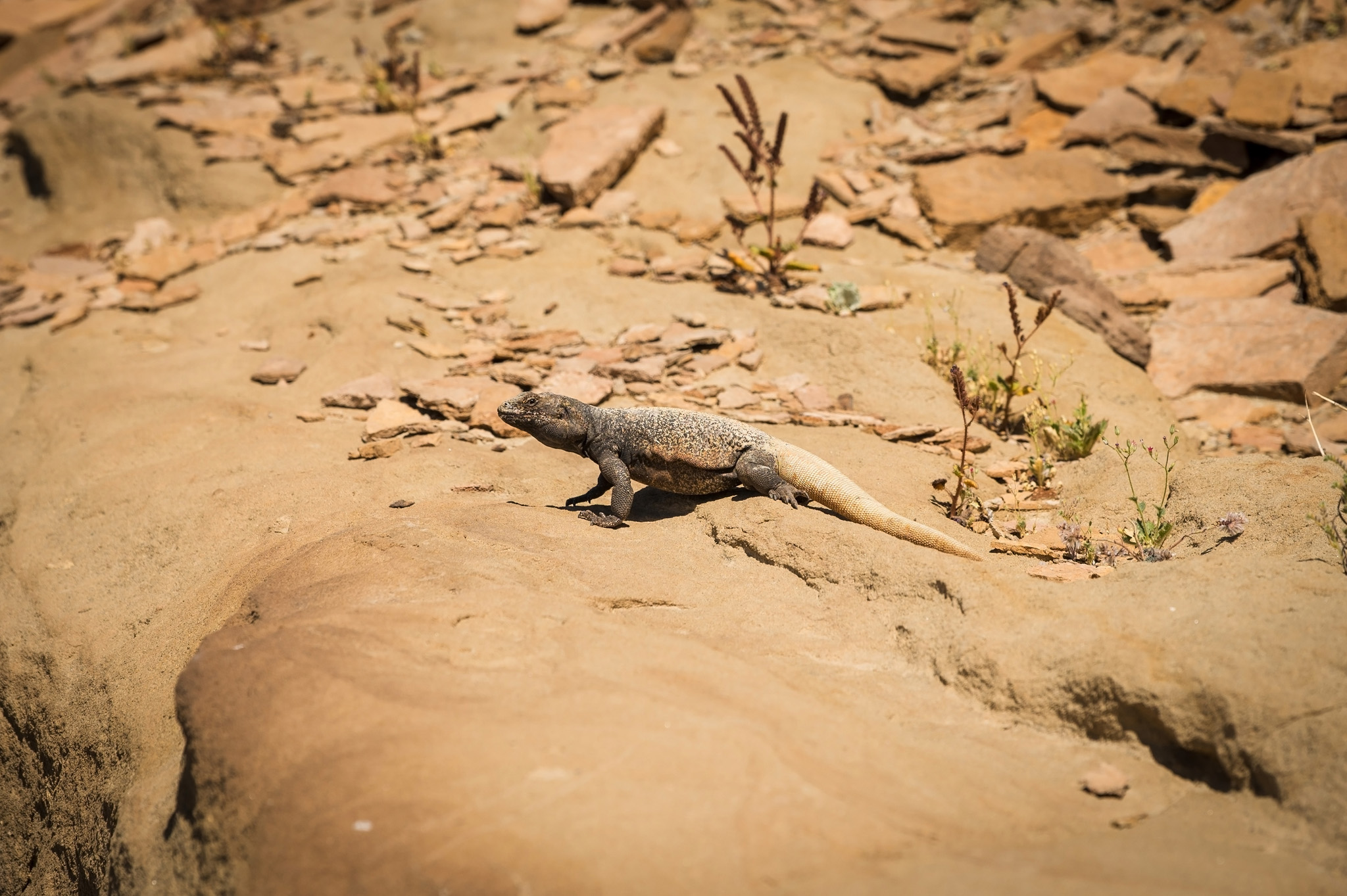
A Chuckwalla Lizard. A box canyon at the end of the Hole In The Wall Road, a gravel road that follows a dry riverbed for 10 km’s.
Since we were in my Mom’s Jeep, we decided to go up this little dirt side road know as the Hole In the Wall road, which snaked up a dry riverbed for about 10 km’s. At the end of it you run into dead end box canyon. I decided to go walking around and came across this big, like a foot long, lizard sitting on a rock looking at me. According to the naturalist, this is a Chuckwalla lizard.
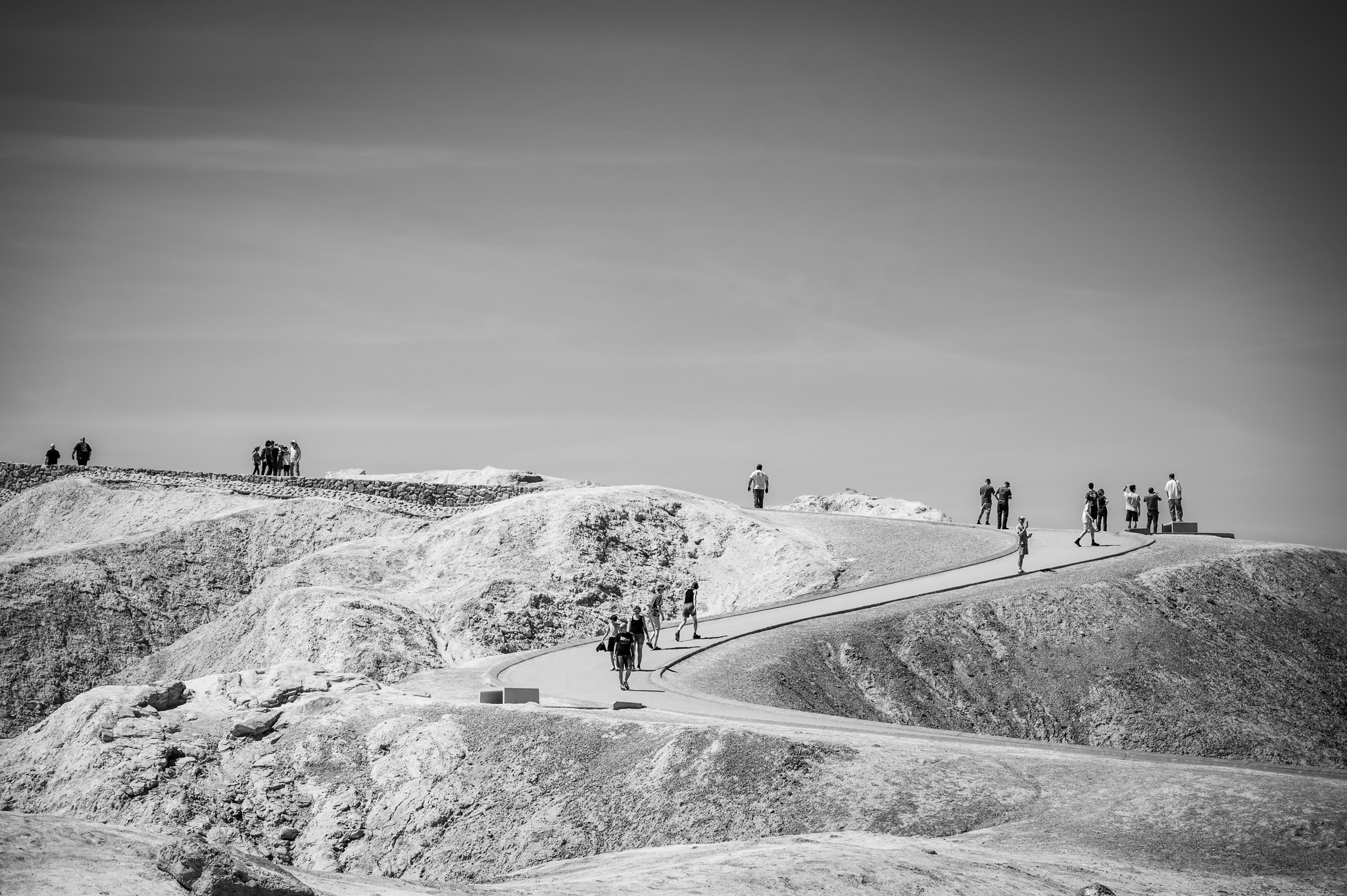
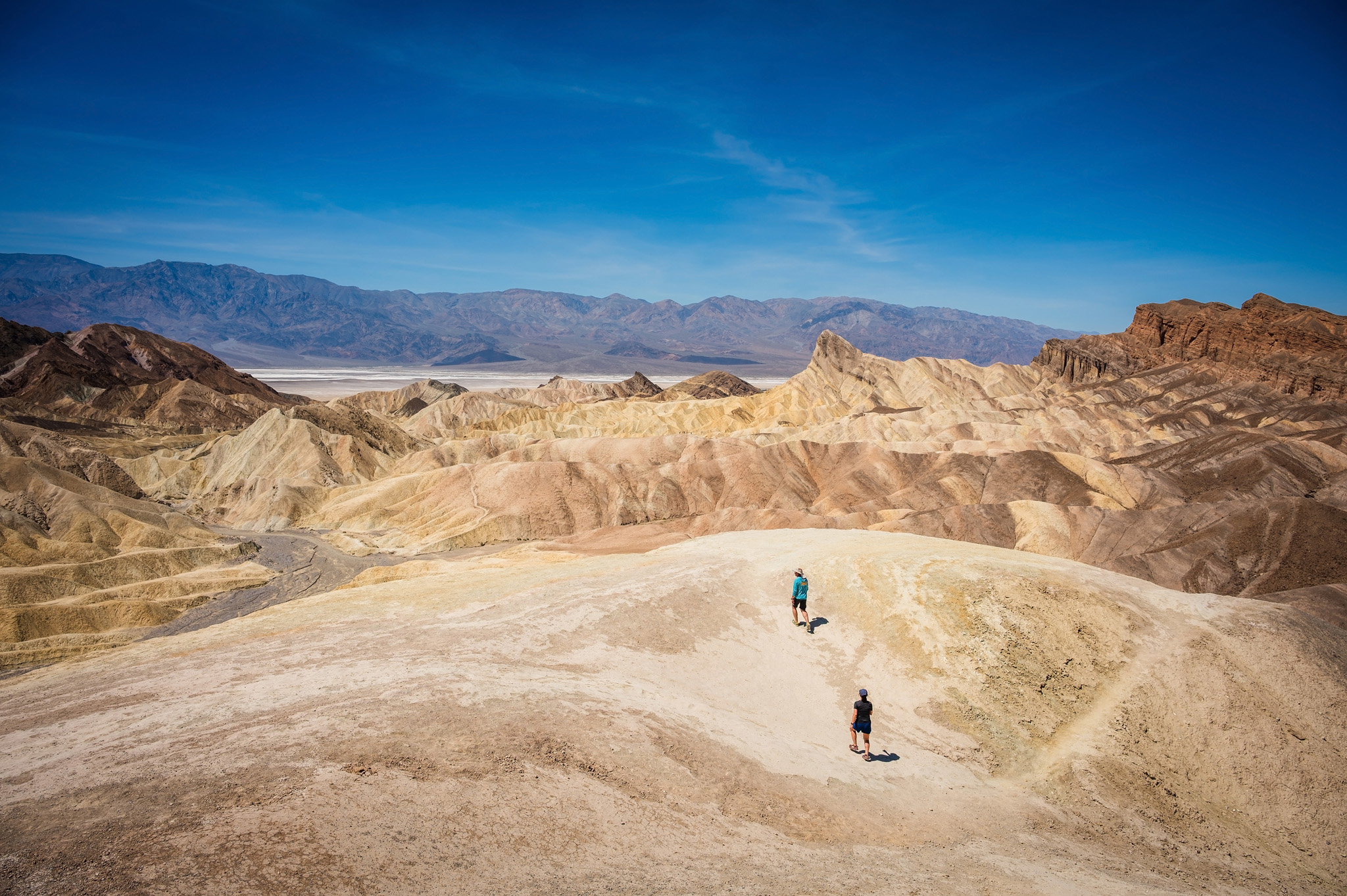
Tourist walk a path at Zabriskie Point in Death Valley National Park.
Across the road from the Hole In The Wall road is Zabriskie Point, a big tourist spot. The place was packed with bus tours from Las Vegas. The View was amazing though, you could see the riverbed we drove up on the other side of the road, and the Badwater Basin in the distance where we drove around the night before.
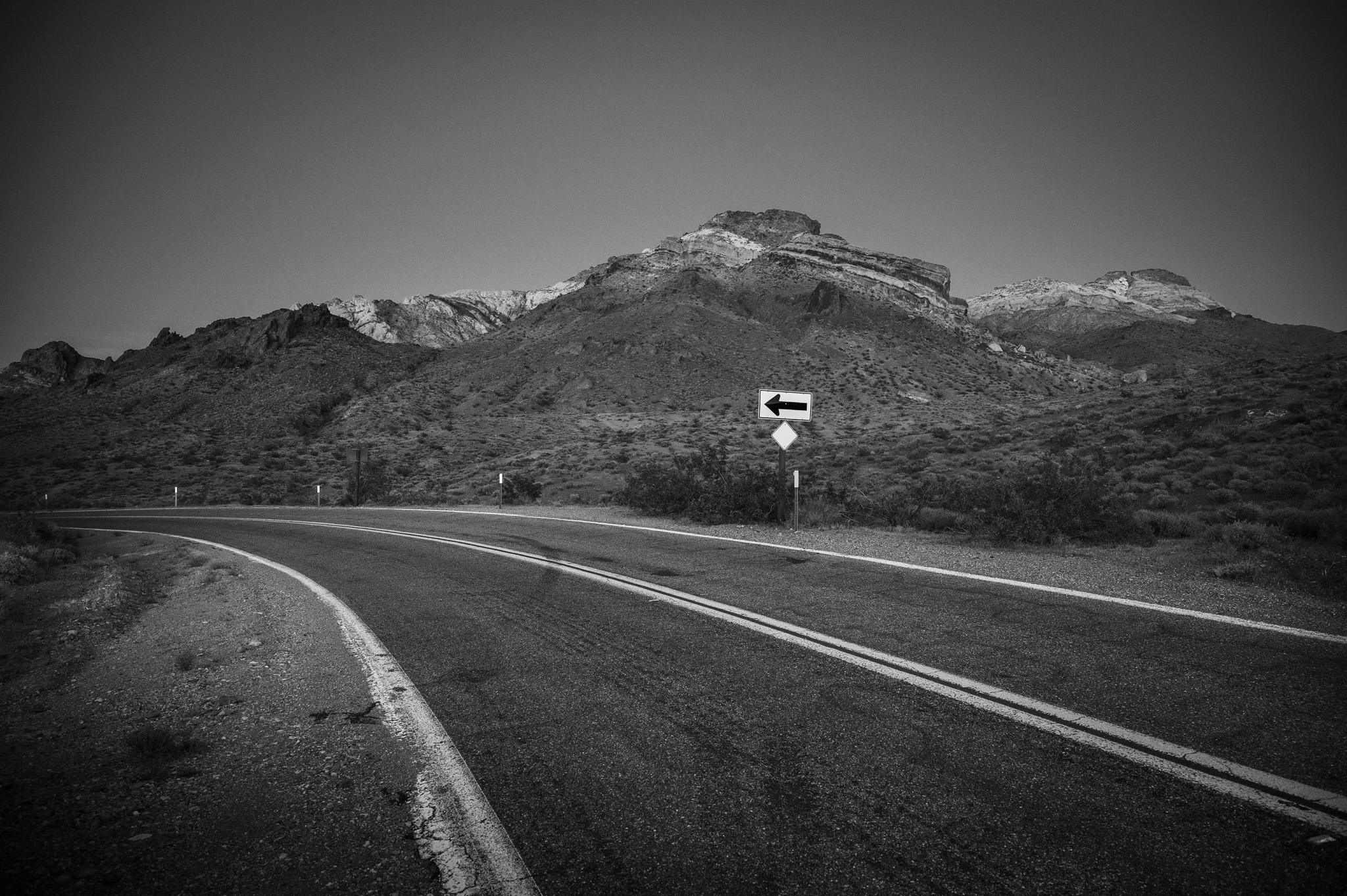
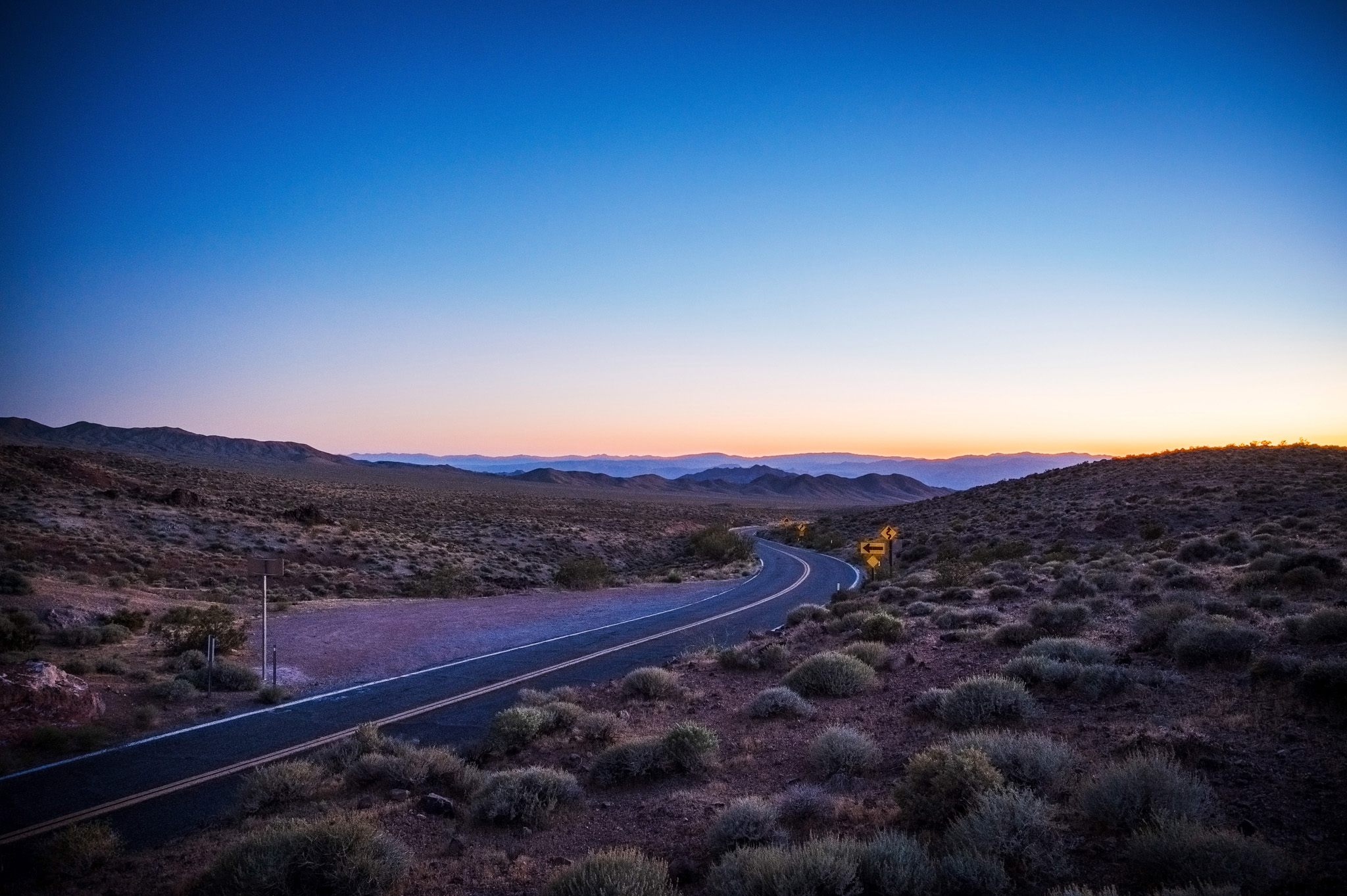
Highway 178 runs through the mountains near the Badwater Basin in Death Valley National Park at sunset. California, USA.
Driving toward Pahrump Nevada to spend the night on a beautiful evening.
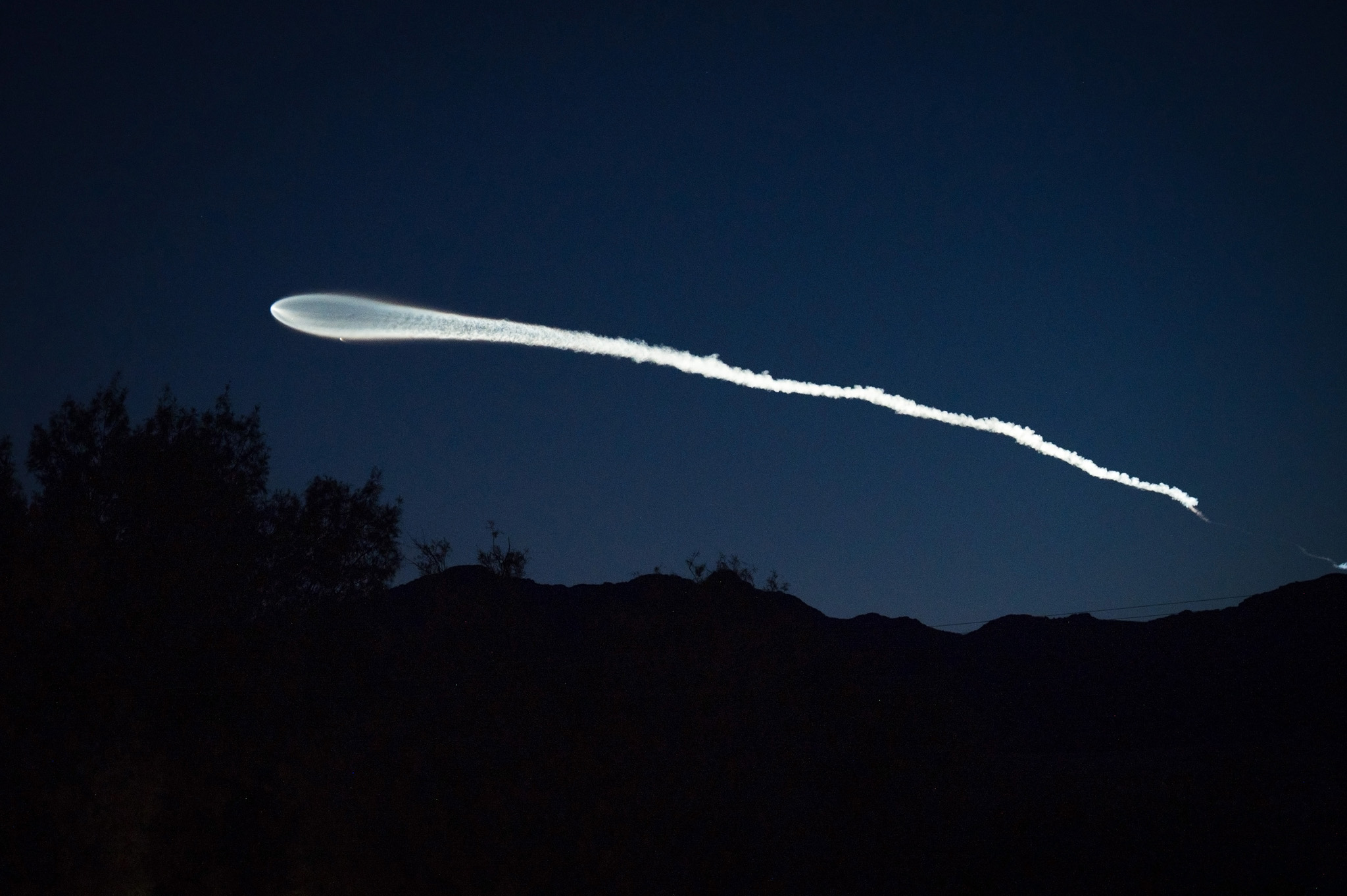
A SpaceX rocket soars over Shoshone California after being launched from Vandenberg Space Force Base in Santa Barbara County, California.
We got a final lightshow from Elon Musk, whose SpaceX sent this rocket over Shoshone California that evening.
Tech Stuff
For the first time, I wished I had a macro lens to photograph flowers with. I used my 24-120mm (which was the only lens I used on that trip) to get as close as I could, then cropped the frame down to about 50%. Even with the Z6’s relatively small 24MB sensor, that’s still plenty for blogs and social media. I set the lens to its closest focus distance, then moved the camera back and forth until I got the petals sharp in the frame.
Since I had flown down from Vancouver, I didn’t bring a tripod with me for the scenic shots. The sky was pretty bright, even at sunset, and the foreground was way in the shadows, so the only way to balance it out is have one exposure for the sky and another for the foreground, and then blend them together by hand in Photoshop.
The highway photos at dusk were pretty much at night, so I upped the camera ISO to 12,500. Even at a web sized image, you can still see the grain (actually didgital noise). If I’d had a tripod, I could have done a ten second exposure, but that’s what you get for travelling light.
I’ve been to Death Valley a few times over the years and it’s like walking around on the moon, no life at all. This time with the recent rain, it was alive with bugs and little lizards and other critters. I was thinking that if you have small animals, you get snakes, so I was doubly on the alert for anything that might take a bite out of me.